We must expect the creation itself to reflect God’s eternal intentions with his people, and that to be of true history. To do any less is to make him less than God. We are living in the story of the creative genius, who knows all things and sees all things, and is over all things
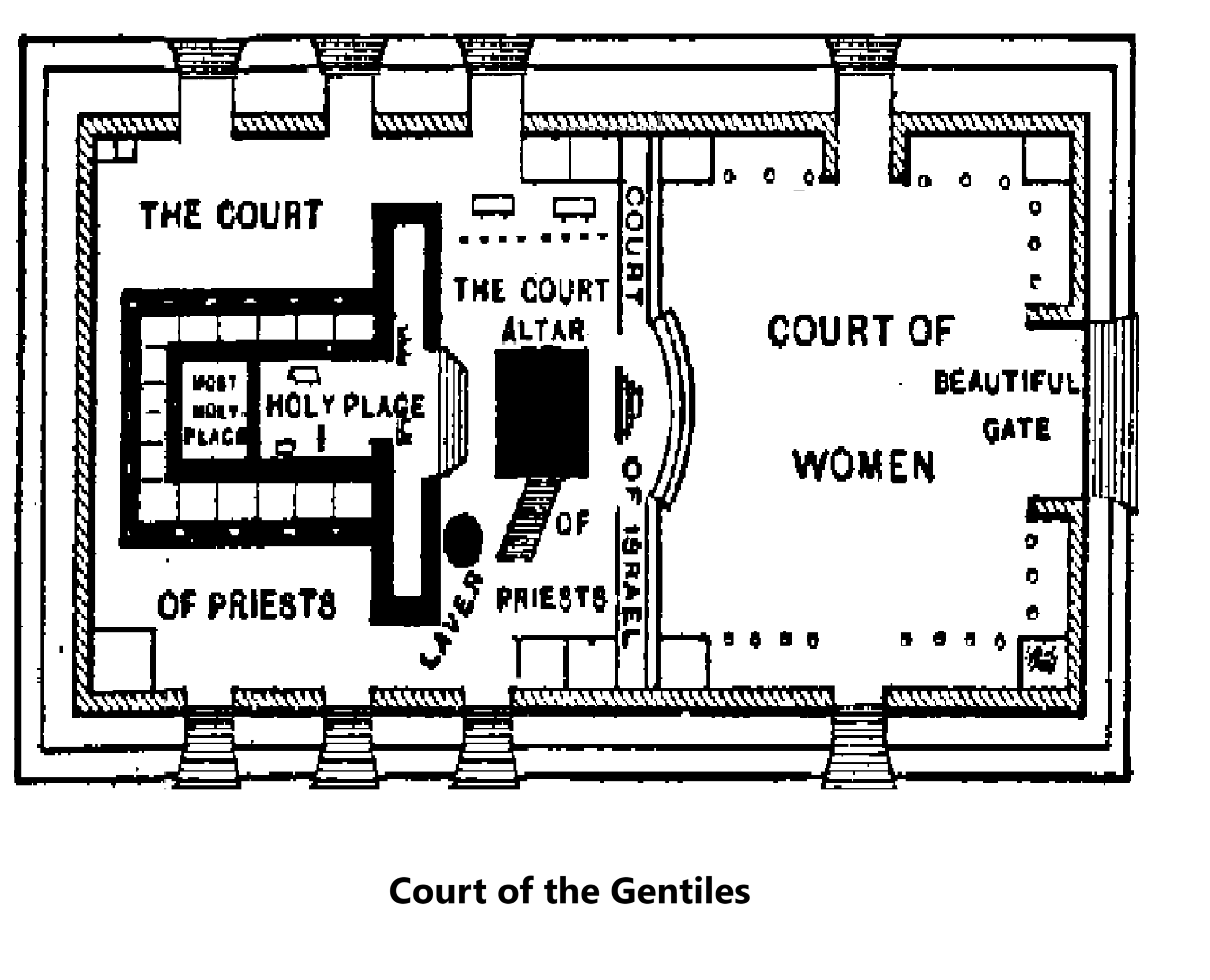
Fellowship with God occupies a central role in the in the message of the Gospel, as we are told in Ephesians 2:13 “But now in Christ Jesus you who once were far off have been brought near by the blood of Christ.” This may be lost upon first reading centuries later, but this is a reference to the Temple of Paul’s day. Namely, the Gentiles who were not permitted into the temple complex itself.
The theater of scripture as it were, pays more than mere homage to this. In fact, we can see from the very beginning that God fellowships with his people in a special place made for the task. The places of meeting are in reality, about getting back to the original place of meeting (Eden) in a state of glory.
On a second read of scripture, we find that the temple exists from the very beginning. We see this in things as simple as when God is said to stretch the heavens like a tent, the image is of a temple being erected in ps 104:2 and Isaiah 40:22. When God is said to stretch the heavens like a tent, the description fits that of a holy place like the tabernacle with it’s temple veil. As we examine the subject, we discover that the creation is in fact, a temple, a holy dwelling place for God to dwell with his people.
W encounter the human construction of a special dwelling place with God for Israel in the Exodus from Egypt. God had gone before Israel as a column of fire, a recurring theme in scripture. This divine image conveyed God’s holiness (Exodus 13:21-22). God spoke to Moses alone, in his tent known as the tent of meeting, due to the impurity of the people. He pitched his tent far outside of the camp in order to protect the people from his presence (Ex. 33:7-11). They would then seek word and counsel by leaving the camp to visit the tent. When Moses entered the tent, God in a pillar of cloud would come down and stay at the entrance (Exodus 33:9). Moses face would shine with God’s glory, and he alone could commune with God face to face (Exodus 34:29-35). This tent of meeting was not sufficient for the whole nation, but required an intercessor like Moses.
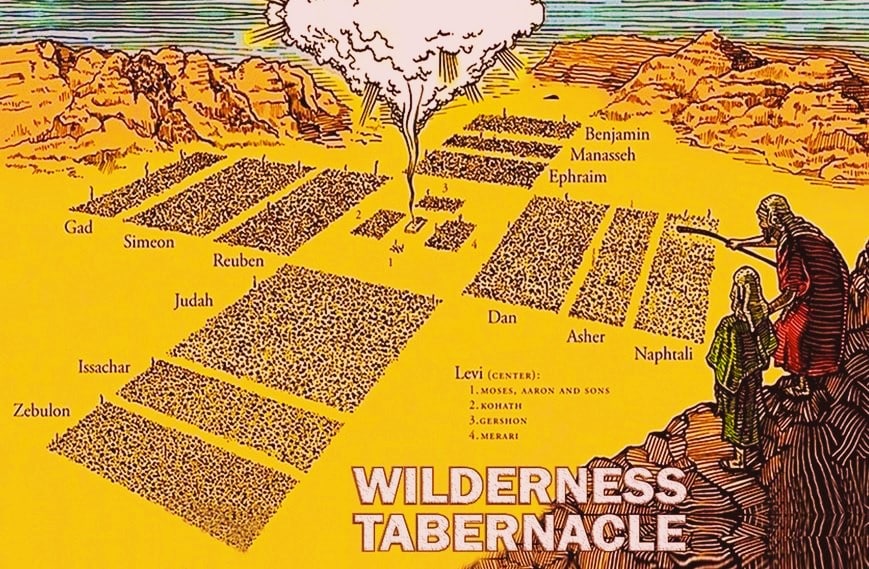
The later Tabernacle was likewise to provide a dwelling place of God amongst his people (Ex 25:8, 29: 5, 43-46). Moses had the Tabernacle constructed at God’s direction (Ex. 25:9). Israel encamped at a distance from the Tabernacle, located in the center of the camp. This left space for safety, but also gave room for the congregation to assemble for worship (Numbers 2).
Notice in proportion, the encampment makes a cross.
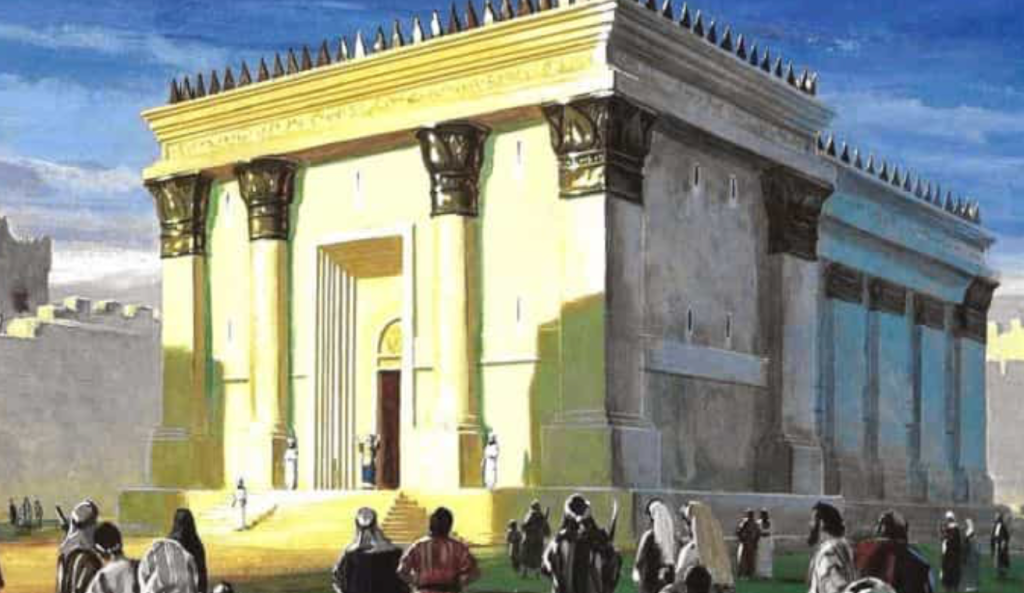
Traditionally the Tabernacle is seen as a small-scale version of Solomon’s Temple (approximately 957BC) which was three times its size. Given the descriptions in Exodus 26 and 36 the Tabernacle is estimated to have been 20 cubits in length, 10 cubits in height and 8 cubits in width. The Tabernacle had 48 wooden frames, each 10 cubits long and 15 cubits wide. There were 20 frames in each of the two long sides of the Tabernacle and 8 frames in the rear wall. While the scale is not identical in the later Temple, the measurements fit the place where the Ark is set in 1 Kings 6 and 2 Chronicles 3.
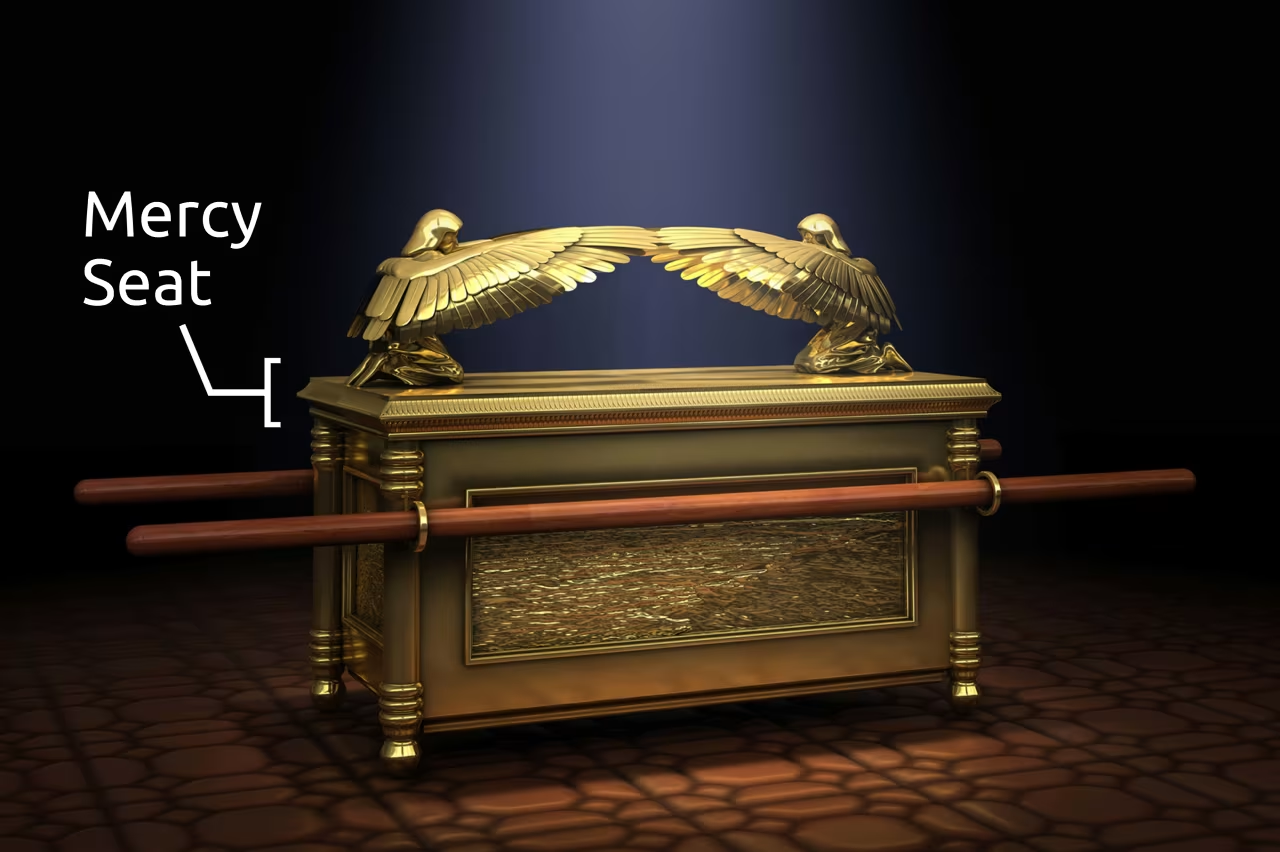
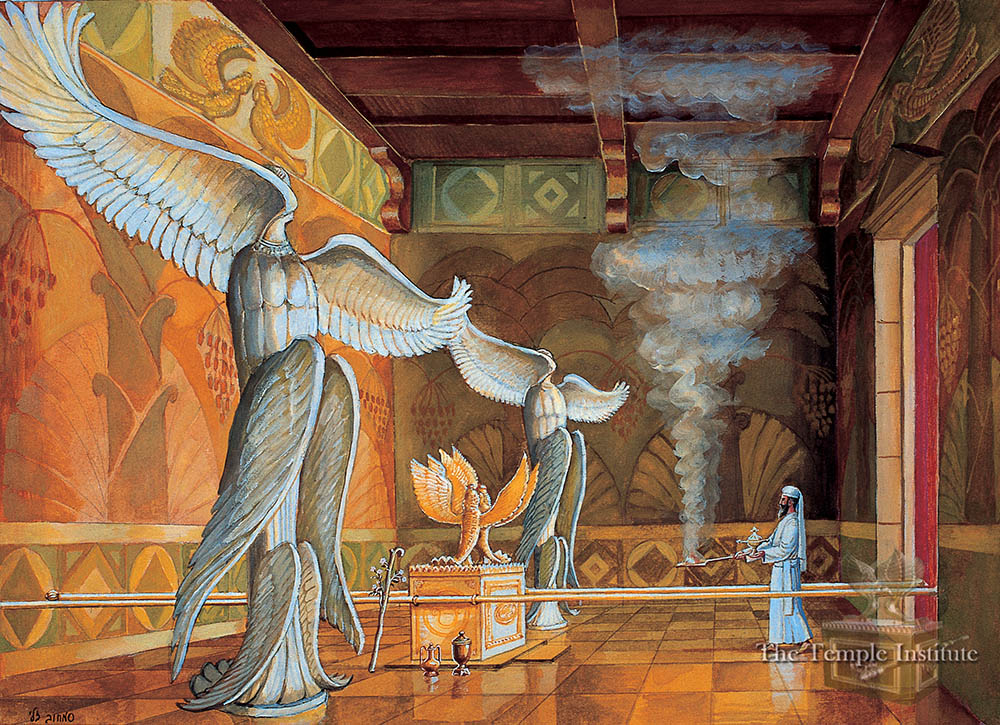
The Holy of Holies contained the Ark of the Covenant, also referred to as “the Ark of the Testimony” (Ex. 25: 16, 22). The veil was hung for the Ark in the Holy of Holies creating a division between the Holy of Holies and the Holy place. The Tabernacle would correspond in size to the Holy of Holies in the first Temple beneath the wings of the Cherubim.
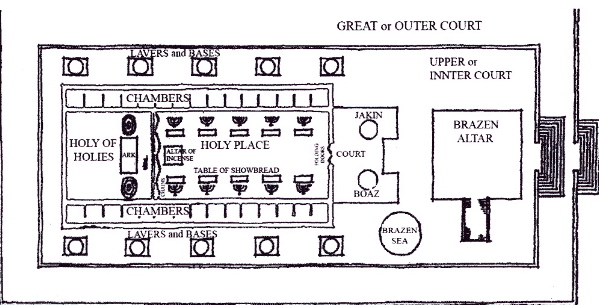
The layout of Solomon’s temple
The Cherubim within were 10 cubits high, 20 in length and less than 10 in width with their wings spread. The tips of the wings of each touched the walls of the room on each side and touched each other in the center of the room. The measured space between the Cherubim in the size and dimensions created the effect of the Cherubim spreading their wings to form a tent. Tenting or tabernacling would provide key imagery later, especially for the Temple.
Notice the wings form a tent
The first Temple contained the Tabernacle’s layout including the Cherubim and holy places. This displays itself thematically in poetic images in the Old Testament as those found in Ps. 26:8 or Ps 76:2-3. The Psalmist sets the Temple and Tabernacle in parallel declaring “YHWH I love the dwelling of your house, the place of your glory’s dwells (literally tabernacles)” (Ps 26:8).
The Psalms make much use of the tent and Cherubim parallel. Ps. 61:4 “I shall dwell in your tent forever I shall conceal myself in the cover of your wings,” which notably doesn’t pair the tabernacle with the Temple but with the shelter of YHWH’s wings, likely represented by the Cherubim’s wings. This matches the arrangement of the Tabernacle under the wings of the Cherubim. God’s wings are spoken of as a place of refuge and comfort
“I ask one thing of YHWH that I shall seek that I may dwell in the House of YHWH all the days of my life to envision the beauty of YHWH and to visit in his Temple, for he will conceal me in his canopy; in a day of trouble he will hide me in the covert of his tent.”
Psalm 27:4
Jesus appears to pick this imagery up later.
37 “O Jerusalem, Jerusalem, the city that kills the prophets and stones those who are sent to it! How often would I have gathered your children together as a hen gathers her brood under her wings, and you were not willing! 38 See, your house is left to you desolate. Matthew 23:37-38
Tent and Tabernacle parallels are common in the ancient Near East, but the parallels of tent terminology with the house of God are more distinctly Israelite. No doubt this relates to their time of wandering, but the reality that their God would wander with them provides an inescapably unique image of his desire to be with his people. The “covering” language is often expressed in terms of the covering of “wings.” Jesus’ words of taking Jerusalem under his wings (Mt 23:37, Lk 13:34) is a call back to the Israelite practice of God covering his people as found in the Psalms.
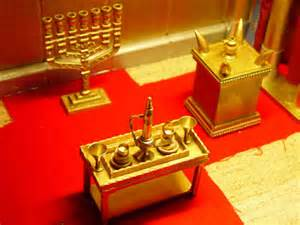
Within the Holy Place was a table for wine and the Shewbread. The Shewbread, literally “the bread of faces” sat before the lord symbolizing the twelve tribes continually. These were accompanied by a menorah signifying the visible planets and the moon and the presence of an altar of incense.
The mercy seat was part of the Ark of the Covenant. The significant presence of Gold developed a holy and heavenly quality. The gold was so refined in the beams holding up the outer court walls it was described as “gold as pure as to appear as glass.” Silver was present in the Tabernacle, and was typically a sign of the price of atonement. Precious metals signified glory.
Those offering the sacrifices entered the court where the animal was slain. It was then cut to pieces on the North side of the altar. Only the priest would enter the sanctuary. Aaron and later high priests would put blood on the horn of the altar, testifying to peace once made. Since silver symbolized atonement, the children of Israel were to give a half a shekel of silver as a ransom for their soul (Ex. 30:11-16). The use of silver parallels plays a role in the Gospel’s, as the price placed on Jesus’ head in is in silver (Matthew 26:14-16). In the sacrificial system goats represented the wicked and kid goats were offered in sacrifice (take the wilderness offering Leviticus 16:10). On the Day of Atonement a bull was brought in and sacrificed for Aaron and his house (Leviticus 16:6). The priests needed sacrificial offerings for their atonement until Christ the last and great high priest, who alone is without sin.
5 For every high priest chosen from among men is appointed to act on behalf of men in relation to God, to offer gifts and sacrifices for sins. 2 He can deal gently with the ignorant and wayward, since he himself is beset with weakness. 3 Because of this he is obligated to offer sacrifice for his own sins just as he does for those of the people. 4 And no one takes this honor for himself, but only when called by God, just as Aaron was.
5 So also Christ did not exalt himself to be made a high priest, but was appointed by him who said to him,
“You are my Son, today I have begotten you”;
6 as he says also in another place,
“You are a priest forever, after the order of Melchizedek.”
7 In the days of his flesh, Jesus[a] offered up prayers and supplications, with loud cries and tears, to him who was able to save him from death, and he was heard because of his reverence. 8 Although he was a son, he learned obedience through what he suffered. 9 And being made perfect, he became the source of eternal salvation to all who obey him, 10 being designated by God a high priest after the order of Melchizedek. Hebrews
Hebrews 5:1-7
The Chronicler understands the Tabernacle to be the place at which the priestly laws of daily sacrifice were to be executed (1 Chronicles 16:39-40). The Ark is described as going from tent to Tabernacle. The image of the Tabernacle consistently carries over into the Temple in Jerusalem. The Temple must be a copy of the Tabernacle for it to be legitimate as a meeting place for God and his people. The Chronicler organically makes this connection. The service of the Cohens in this tabernacle is tied to “the house of YHWH”(I Chr. 23:32) which developed later into the Temple. The Tabernacle and Temple are both called the house of YHWH.
David had appointed individuals to serve before the Tabernacle and the tent of meeting until Solomon built the house of YHWH (1 Chronicles 16:37-18:17). Jewish historian Josephus states that the Tabernacle was brought into the Temple. The Temple would prove grander than the Tabernacle while following the same ground plan. Upon its erection the Shekinah glory of God rested upon the Temple as it had the Tabernacle and Tent of Meeting (2 Chr. 7:1-3).
Solomon’s Temple had ten lavers standing on ten bases, with molten seas (bronze basins) standing on twelve Oxen (1 Kings 7:23-26). This develops as Ezekiel depicts no basins or seas, but rather a river flowing out of the temple (Ez. 47:1). We see this particular image again.
Then the angel[a] showed me the river of the water of life, bright as crystal, flowing from the throne of God and of the Lamb 2 through the middle of the street of the city; also, on either side of the river, the tree of life[b] with its twelve kinds of fruit, yielding its fruit each month. The leaves of the tree were for the healing of the nations. 3 No longer will there be anything accursed, but the throne of God and of the Lamb will be in it, and his servants will worship him. 4 They will see his face, and his name will be on their foreheads. 5 And night will be no more. They will need no light of lamp or sun, for the Lord God will be their light, and they will reign forever and ever. Revelation 22:1-5
Solomon recognized when building the Temple that it was truly not God’s dwelling place, but rather it was the place of meeting (2 Chr. 2:5-6). “Even the highest heaven cannot contain him” he declares at the dedication of the Temple (2 Chr. 6:18-21). In early Jewish literature the Temple became known as the “throne of God.” The loss of the Temple signified the loss of God’s presence when it was destroyed.
The Temple even gains greater importance as the Temple and its city became known as the dwelling place of God in the days of the kings (1 Ki.8:13; Ps 132:11-14). Due to this importance, Israel developed a tendency to elevate the Temple beyond the bounds of orthodoxy. Following the erection and dedication of the Temple Israel began to trust in the Temple, not in God. Jeremiah strongly denounced such Temple centered idolatry (Jer. 7:3-15). Abuse of the Temple system became a theme in Israel’s history and Hezekiah addressed the priests and Levites to clean and sanctify the Temple (2 Chr. 29). The trespasses of Judah against God and his Temple demanded reform. The Old Testament ends on this note with a promise of reform in the book of Malachi, and a warning (see Malachi 1:6-14).
At the time Israel was conquered by Assyria then Babylon, it had already set up false worship when Judah was expelled and the Temple destroyed (seen 200 hundred years earlier in 1 Kings 12:25-33). The Temple was rebuilt under the Persian King Darius in the days of Ezra (Ezra 6:15). Many prophets equated this with the regathering of Israel.
Many psalms mourn and lament the destruction of the Temple (Ps 74:7). In the post Solomonic temple psalms, the equating of the Temple and Tabernacle/tabernacling and being with his people are still present (Ps.15, 42,43,46,76, 84). Lamentations refers to the destruction of the Temple as “the tent of meeting (Lam. 2:6-7, often translated booth in connection with the feast of booths/tabernacles) mourning that YHWH has caused holiday and Sabbath to be forgotten in Zion.” Rabbinic tradition came to state that the Shekinah dwelt in the first Temple, but not the second. The destruction of the Temple would have a lasting effect on Israel and their expectations for the eschaton, as they sought a perfect temple, both in composition and in holiness.
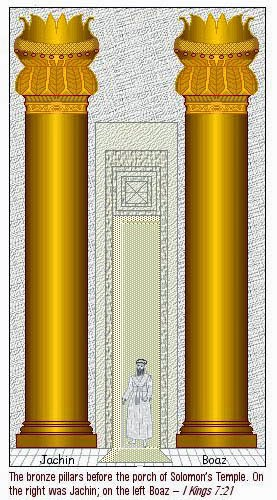
The New Testament declares the Church the New Israel, developing the church along Temple imagery. As God had purchased his people out of Egypt (Eph. 2:22), God wishes to dwell with the church, now in a house composed of living stones (1 Peter 2:5). Those who conquer, enduring the tribulation, Christ declares will be made “a pillar in my church” (Rev 3:12). Each believer who endures is a “pillar” in God’s Temple. The pillar was a natural and important part of a Temple providing stability and a sign of permanence.
In Hebrew the words for tent and tabernacle are distinct. However in Greek they are one word (σκηνή). In Greek the union then becomes clearly an identical identity, a harder tie than being two-types of one dwelling. In the New Testament Jesus was both the Tabernacle in which God dwelt and the Temple (John 2:19). He represented the tent in which God sojourned and John describes Jesus as “tabernacling” on the earth (John 1:14). Christ was the real presence of the Godhead; God incarnate became the place of meeting on the earth (as well as the high priest). In light of our union with Christ, the image naturally transfers to the Church.
22 In him you also are being built together into a dwelling place for God by[a] the Spirit.
Ephesians 2:22
The Temple and the promise of the Messiah and the inclusion of the Gentiles are interpreted in light of Jesus Christ and his redeeming work. Jesus’ death and resurrection created the new Temple and worship. While always present, Jews had a concept of a heavenly Temple of God that developed in the intertestamental period (1 Enoch 14:16-20). It is in 1 Enoch we see the fullest description of the heavenly Temple in the minds of intertestamental Judaism (1 Enoch 14:16-20). This displays quite plainly their longing for a permanent residence with God that cannot be destroyed in war.
In the Old Testament canon, Isaiah, Jeremiah and Ezekiel all prophesied about the eschatological Temple. Antiochus Epiphanes committed the abomination of desolation, which in the minds of many confirmed the Temple was not fully restored to holiness. In the eyes of many rabbis the divine presence had not returned to the Temple. In this setting Israel began to develop the theology of the heavenly Temple. Spiritualizing of worship became a tendency in the intertestamental period. Without a pure Temple, sacrifice was impossible so offering a contrite soul, a humble spirit and obedience became considered acceptable to God.
This heavenly Temple is the eschatological dwelling place of God with his people. Both the first and the last use in Revelation of the word temple connect it with Jerusalem and therefore the New Jerusalem.
The one who conquers, I will make him a pillar in the temple of my God. Never shall he go out of it, and I will write on him the name of my God, and the name of the city of my God, the new Jerusalem, which comes down from my God out of heaven, and my own new name.
Revelation 3:12
This forms a chiasm, a parallel with the description of the bride as the temple.
22 And I saw no temple in the city, for its temple is the Lord God the Almighty and the Lamb. 23 And the city has no need of sun or moon to shine on it, for the glory of God gives it light, and its lamp is the Lamb. Revelation 21:22-23
The Church is described as being constructed in Paul’s letter to Romans (Rom. 11:25) until the fullness of the Gentiles comes in. What makes this holy Temple so holy is the indwelling presence of God in the Spirit. Scripture describes God’s building when bringing into being a people for himself (Jer. 31:4; 12:16; Ps. 89:4; 51:18; 102:16; 147:2).
Jesus is depicted in revelation standing among the lampstands which represent the church. He wears a long robe and golden sash depicting Christ as priest and king. Through the indwelling Spirit, the assembly of believers becomes the Temple of God. (1 Cor. 3:16). Ephesians 2:20 provides the first example of building imagery in the New Testament, Christ being the chief cornerstone. 1 Corinthians 6:19 declares that God through the Holy Spirit indwells the believer personally, so that his body becomes “a Temple of the Holy Spirit.” The whole church together is growing into a Holy Temple (Eph. 2:21). With various ordinances in the Temple Jewish men and women were separated, Gentiles were even farther away. In the book of Revelation all have an equal place in God’s Temple, without distinction (Rev. 11:1-2) even becoming parts of the temple itself.
Being apocalyptic, much of the imagery in Revelation is highly symbolic, and tied to the temple. John is told to measure the outer court, with the court outside the Temple being handed over for a time, likely a sign of persecution (Rev. 11:2). John is also told to measure the Temple and the altar, symbolic of God’s people being restored.
Revelation does start of with Christ the High Priest in the Sanctuary, standing among seven temple lampstands (Revelation 1:9-20). In Revelation 4:2 John looks up to see a heavenly doorway into the throne room of God, possibly the doorway into the Temple. Within there are twenty-four Elders (Revelation 4) with thrones, crowns and white garments. John is witnessing a temple worship service on “the Lords Day” (Revelation 1:10).
The Elders represent God’s people from Old and New Testaments, who serve as priests and kings. In Revelation 5:8, temple incense again makes an appearance, as the prayers of the saints. Cherubim surround God as in Isaiah 6 in the Temple, now after Christ’s atonement joined by the martyrs now able to enter. The Bronze Seas of the temple are represented by a sea of glass, pure without any further need for sacrifice (Revelation 4:1-6, 15:1-2). The living Creatures worship God constantly, leading the divine liturgy of the saints within the Temple. The Temple service in Israel ceased in the evening, but the service to God in the heavenly Temple is continual day and night, in strong contrast to earthly Temples.
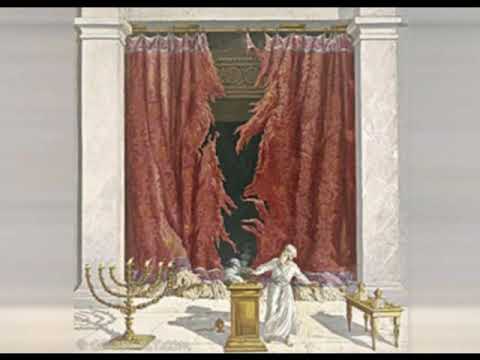
Jesus presented himself before the throne as a lamb slaughtered as the last sacrifice in this setting (Revelation 6:6-14). Christ stands as both priest and sacrifice, having sacrificed for those counted into his house (Heb. 3:6). The Temple veil separating the Holy of Holies was torn at Christ’s crucifixion (Mat. 27:51) symbolizing the beginning of the outpouring of the Spirit and God’s presence with his people. The author of Hebrews speaks of Jesus entering the Holy of Holies in his ascension, presenting himself before the father. The veils in the earthly and heavenly Temples are torn, and the Spirit of God has been poured out onto his people at Pentecost (Acts 2).
The Temple is described as “the Tabernacle of Testimony,” a heavenly equivalent to the Tabernacle in the wilderness. The Temple in heaven opens showing the Ark of the Covenant, lost in the exile. God’s presence with his people is now permanent (Rev.11:19).
Being so theocentric, the metaphor for the church as the Temple is perhaps the most significant doctrine defining what the church is. The Temple is depicted in conjunction with the images of the church as Christ’s body and bride. John connects the Temple of God with the city of God, Jerusalem (Rev. 3:12). The armies of Gog and Magog besiege the city, but within the city and the Temple (a place of refuge) God’s people are safe until he judges their enemies. Ezekiel prophesied a heavenly Temple in (Ez.40-43), yet by the end of Revelation John sees no Temple, for God and the Lamb are the Temple (Rev. 21:22).
We are being shown God is now accessible to all of his people at all times. God fills creation as his holy Temple. John details the given dimensions specifically (Rev. 21:16). The dimensions image this heavenly Jerusalem as a cube, in both the shape and the proportion of the Holy of Holies where God dwelt in the temple. The entire city of Jerusalem is the Temple itself, the pattern of the Mosaic Tabernacle. The Shekinah’s full and permanent residence becomes creation itself. Ezekiel’s depiction of a Temple with a river and no basins becomes true, as waters of life flow out of the throne as God makes all things new (Rev 21). At last, the forbidden tree of life (Gen. 3:24) appears again, given now for the healing of the nations (Rev. 2:7, 22:2, 14, 19).
This is the restoration and even glorification of the relationship man enjoyed with God in Eden. Eden, and the intended meal at the Tree of Life within it, are the original temple and fellowship man was to have with God. The Shewbread and the wine present in the temple foreshadowed the Eucharist, in turn shown to us as the “tree of life”, with the curse upon creation being removed (Revelation 22:1-3 ). When Christ died, the Temple veil was torn (Mat.27:51). The author of Hebrews speaks of us entering through the veil, representing Christ’s flesh showing, him as the way of entrance (Heb. 10:19-20).
The three-fold division of the Temple is visible in the cosmology as the author of Hebrews suggests. The Holy of Holies is the third heaven; the veil is the second with the celestial bodies. The first heaven of the atmosphere is the inner sanctuary and the earth is the court, whereas outside lay Sheol (where there is weeping and gnashing of teeth, outside of God’s temple Matthew 13:41-43).
Hebrews 9 speaks of Jesus entering past the veil to present himself as offering in the heavenly Holy of Holies, the throne room in Revelation. With the Temple veil torn at the crucifixion (Mat. 27:51) and again at Pentecost the whole of creation is becoming the Holy of holies. The Church will fill this new Creation and lives now as the priesthood of all believers.
Reading the creation account in Genesis 1 with this cosmology in mind, one clearly sees that in creating the universe God was making a temple, a holy place for him to dwell with his people. The Gospel is the final and full realization of this. This does not make Genesis 1 not literal and nonhistorical. Rather, it exposes the creative, even authorial intent of God in his act of creation. He is building a house to dwell with his people forever, as a husband does for his bride.
Some may suggest this is too perfect a literary device. God’s using the creation to show us a deeper meaning must mean it is not historical. But who would dare accuse God of having no intention in his creation? After all there are too many clever images within it.
Who would accuse God of not being a literary genius, or of this having no effects on his work of creation? It is a non-sequitor to argue he did not intend from before all time to create the world with the story of redemption in his purpose. Our God is a God with purpose, sovereignty and creative ingenuity. We must expect the creation itself to reflect God’s eternal intentions with his people, and that to be of true history. To do any less is to make him less than God. We are living in the story of the creative genius, who knows all things and sees all things, and is over all things. Let us not imagine him as anything less than what he truly is.
I close with this summation of how the Temple displays God’s intention to dwell with his people.
Adam was meant to be a priest, but failed when he partook of an unholy sacrament in the garden with the Serpent, ceding his role of high priest to Eve (Genesis 3). The Menorah in the temple represents the burning bush, and the tree of life in the garden (or the tree of life in Revelation 22). The altar in the temple courtyard (the earth) was the cross where the offering was made for us by Christ, opening entrance into the temple. We are then washed as in baptism and enter into the Holy Place. Communion serves as a continual practice representing our presence there with God in the Holy of Holies, now opened with the temple veil torn and the Spirit poured into the believing world. After Eden, to see God in the Old Testament meant death, in the New Testament it means life and fellowship as was originally intended when Adam walked with God in the garden (Genesis 1-2). Now in the New Covenant, God is making creation his Temple as he had always intended.
Bibliography
Richard E Friedman, “The Tabernacle in the Temple.” The Biblical Arkhaeologist 43, no 4 (Fall 1980), 241-248.
Larry R Overstreet, “The Temple of God in the Book of Revelation.” Bibliotheca Sacra 144, no 664 (Oct-Dec 2009), 446-462.
Metzger, Bruce M. Breaking the Code: Understanding the book of Revelation. Nashville: Abingdon Press. 1993
Thomas Newberry, Types of the Tabernacle. Kilmarnock Scotland, John Ritchie Publisher, 1935.
Zimmer, Robert G “Temple of God” Journal of the Evangelical Theological Society, 18 no 1 Winter 1975, p 41-46.

 The Write Place
Leave a comment