Subscribe to get access
Read more of this content when you subscribe today.
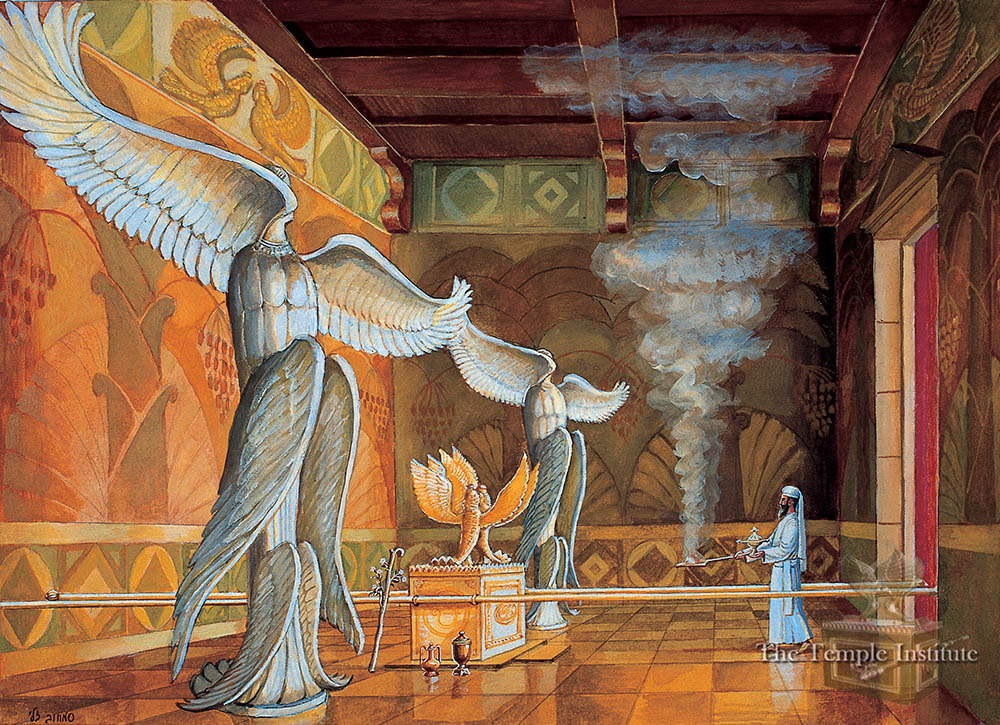
Psalm 82 is often cited as proof of a divine council of angels, called gods, who reign over fallen humanity. The argument does stem from the very real fact that the word for gods (Elohim/אֱֽלֹהִ֗ים ) is used here. There are Jewish Midrash supporting this, however, when we examine the whole counsel of scripture, we find…
1 God presides in the great assembly;
he renders judgment among the “gods”:2 “How long will you[a] defend the unjust
and show partiality to the wicked?[b]
3 Defend the weak and the fatherless;
uphold the cause of the poor and the oppressed.
4 Rescue the weak and the needy;
deliver them from the hand of the wicked.5 “The ‘gods’ know nothing, they understand nothing.
They walk about in darkness;
all the foundations of the earth are shaken.6 “I said, ‘You are “gods”;
you are all sons of the Most High.’
7 But you will die like mere mortals;
you will fall like every other ruler.”8 Rise up, O God, judge the earth,
for all the nations are your inheritance.Psalm 82:1-8
Psalm 82 is often cited as proof of a divine council of angels, called gods, who reign over fallen humanity. The argument does stem from the very real fact that the word for gods (Elohim/אֱֽלֹהִ֗ים ) is used here. There are Jewish Midrash supporting this, however, when we examine the whole counsel of scripture, we find another story.
“In the second clause of the verse, it is not material whether we read, He will judge in the midst of the gods, or, He will judge the gods in the midst. The first construction, however, is the most easy and natural, That however much the rulers of the world may exalt themselves, they cannot in the least impair the authority of God, by divesting him of his sovereignty over them and of the government of all things, which he will ever retain as his inalienable prerogative. But here, as also a little after, the name gods is to be understood of judges, on whom God has impressed special marks of his glory. To apply it to angels is a fancy too strained to admit of serious consideration.”
John Calvin, Commentary on Psalm 82
John Calvin stands on firm ground. But what ground is that? Let us turn to the commentary of scripture on scripture.
then his master must take him before the judges.[a] He shall take him to the door or the doorpost and pierce his ear with an awl. Then he will be his servant for life.
Exodus 21:6
Due to the process of translation, you may miss the original thrust of the passage. The word translated “judges” is not the normal word for judges (שופט). The word instead is (elohim/הָ֣אֱלֹהִ֔ים), meaning the gods. You can see how this then informs us about Psalm 82. There is another passage in Exodus are in the context of legal proceeding. As we put these together we can see why scriptures uses the word for gods.
But if the thief is not found, the owner of the house must appear before the judges, and they must[a] determine whether the owner of the house has laid hands on the other person’s property.
Exodus 22:8
The word again is elohim. Read these altogether and you see there is an implicit legal or courtroom setting. The judges are called gods as well not out of their own divinity. The thing signifying another can be spoken of as that thing. Judges sit in the seat of God, as it were. This is why human judges are at times called gods because they are temporally filling the role.
Don’t believe me? Well look at Jesus’ commentary.
32 but Jesus said to them, “I have shown you many good works from the Father. For which of these do you stone me?”
33 “We are not stoning you for any good work,” they replied, “but for blasphemy, because you, a mere man, claim to be God.”
34 Jesus answered them, “Is it not written in your Law, ‘I have said you are “gods”’[a]? 35 If he called them ‘gods,’ to whom the word of God came—and Scripture cannot be set aside— 36 what about the one whom the Father set apart as his very own and sent into the world? Why then do you accuse me of blasphemy because I said, ‘I am God’s Son’? 37 Do not believe me unless I do the works of my Father. 38 But if I do them, even though you do not believe me, believe the works, that you may know and understand that the Father is in me, and I in the Father.”
John 10:32-38
Jesus refers to the ones who received the word of God as “gods.” In context (a citation of Psalm 82) humans, namely the judges of Israel.
This position has a much more ordered universe, both by kind and political arrangement. All authority derives from God; those judging can be referred to as stand-ins for God. Those who judge falsely are held to account for presenting a blasphemous view of divine justice by their judgments.
Yet, notice the strong ties to divines. Passages like Ezekial 28 and Isaiah 14 describe the king of Tyre interchangeably as a man who thinks himself divine, and with some merit as a fallen angel. We should not be surprised that those who align themselves as seed of the Serpent are likened to him in their unjust rule. The human agent standing in for a false divinity can be spoken of in such terms. We gain a glimpse of the spiritual reality behind unjust rulers; they have abandoned allegiance to God who gave them their position for demonic entities.
As we go further, what are we told of the initial state of man and the angels?
26 Then God said, “Let us make mankind in our image, in our likeness, so that they may rule over the fish in the sea and the birds in the sky, over the livestock and all the wild animals,[a] and over all the creatures that move along the ground.”
27 So God created mankind in his own image,
in the image of God he created them;
male and female he created them.28 God blessed them and said to them, “Be fruitful and increase in number; fill the earth and subdue it. Rule over the fish in the sea and the birds in the sky and over every living creature that moves on the ground.”
29 Then God said, “I give you every seed-bearing plant on the face of the whole earth and every tree that has fruit with seed in it. They will be yours for food. 30 And to all the beasts of the earth and all the birds in the sky and all the creatures that move along the ground—everything that has the breath of life in it—I give every green plant for food.” And it was so.
Genesis 1:26-39
Man is given dominion over all the created world. This is part of the distinction between man and angels. When God speaks in the plural of making man in his image, he is not using a pluralis majestatis, where monarchs spoke in the plural of themselves and their court. This practice did not exist in the Mesopotamian world or scripture but is a later Byzantine innovation. We see the same thing happening in Isaiah 6.
As we read on, we see something changed.
8 Then I heard the voice of the Lord saying, “Whom shall I send? And who will go for us?”
And I said, “Here am I. Send me!”
Isaiah 6:8
The use of the singular (whom shall I send) followed by “And who will go for us?” echoes this trinitarian speech from Genesis 1:1 and 1:26 where God is called elohim, indicating three or more persons. Man is made in the image of God, not the angels as is repeated in Genesis 9:6. Man was originally made to carry the holy place into the creation by continuing to create with the world God made. Isaiah removes the possibility that God is taking council.
Who has directed the Spirit of the LORD, or informed Him as His counselor?
Isaiah 40:13
We see the roll of angels towards man clearly in Hebrews.
14Are not the angels ministering spirits sent to serve those who will inherit salvation?Hebrews 1:14
Angels appear as a heavenly court, and we are told they are ministering spirits. They are not made to carry out the holy place as a physical and spiritual union. Rather they act as emmissaries and guardians of the holy place after the fall of man, who was created for that purpose. Look at how the fall changes things.
21 The Lord God made garments of skin for Adam and his wife and clothed them. 22 And the Lord God said, “The man has now become like one of us, knowing good and evil. He must not be allowed to reach out his hand and take also from the tree of life and eat, and live forever.” 23 So the Lord God banished him from the Garden of Eden to work the ground from which he had been taken. 24 After he drove the man out, he placed on the east side[a] of the Garden of Eden cherubim and a flaming sword flashing back and forth to guard the way to the tree of life.
Genesis 3:21-24
Now we see the angels appear, guarding the holy place from the now fallen priestly race. Guarding the garden, and spreading it through the earth was the call of the human race.
The case for “Sons of God” ever being fallen angels, or a host of angels ruling is not persuasive. However, the reason it can be argued appears to be a misunderstanding the very real connection between the seen and unseen worlds that scripture does teach. Nobody governs apart from a spiritual allegiance.
For our struggle is not against flesh and blood, but against the rulers, against the authorities, against the powers of this dark world and against the spiritual forces of evil in the heavenly realms.
Ephesians 6:12
Man and angels are distinct, and I suspect the term Sons of God is applied to faithful men and faithful angels due to their ongoing fidelity. The adopting a view of a counsel of gods has some merit, the idea that man and angels procreate however is foreign to scripture.
We can embrace the enchanted world of scripture without adopting elements of the Mesopotamian myths meant to propagandize the post-flood world, or apostate Judaism, both with chaotic cosmology that scripture rejects.
Therein lies the issue. Many are adopting incorrect assertions from cultures in the era of scripture and assuming the Bible shares them. Readers a hundred years on may see me use the term love and assume I mean sex with everyone (the definition being pushed). At that point, they take on the assumptions of the very people I am arguing against. It takes a right reading of scripture as it reads itself to sort out what it affirms or denies in cultures around us.
5 It is not to angels that he has subjected the world to come, about which we are speaking. 6 But there is a place where someone has testified:
“What is mankind that you are mindful of them,
a son of man that you care for him?
7 You made them a little[a] lower than the angels;
you crowned them with glory and honor
8 and put everything under their feet.”[b][c]In putting everything under them,[d] God left nothing that is not subject to them.[e] Yet at present we do not see everything subject to them.[f]
As I close out, remember that the Cherubim guarded Eden after the fall. Read through Revelation and see where the angels go. In the beginning, the elders (archangels) around the throne are serving in God’s presence; no humans are present. By the end, all the elders, the angels of all sorts, are replaced. Man is once more in this Edenic setting. Humanity is now brought back into God’s presence, serving as the guardians of Eden as we were intended.
3 And I heard a loud voice from the throne saying, “Behold, the dwelling place[a] of God is with man. He will dwell with them, and they will be his people,[b] and God himself will be with them as their God.[c] 4 He will wipe away every tear from their eyes, and death shall be no more, neither shall there be mourning, nor crying, nor pain anymore, for the former things have passed away.”
Revelation 21:1-4
The declaration that Christian’s are in God’s presence means we must be back in Eden. Man has been restored to his rightful place, Angels are lower than us who are in Christ. All that we await is the fullness of a present reality in glory.
The uniqueness of man, the creature in the imago dei is being fully realized and restored. No longer is the world co-opted by the serpent and his angels. Now the Christian reigns alongside Christ the king. Psalm 82, and much of scripture, calls to account the corruption of those who rule among men. Now that Christ’s kingdom has come, so has judgment on corruption, and reprieve for his people.

 The Write Place
Leave a comment