Subscribe to get access
Read more of this content when you subscribe today.
For all of John MacArthur’s teaching of a defeated, rescued church, it is a belief in practice he has not followed. His church even sued the state of California for to stay open during Covid (albeit after initially folding). MacArthur has at times fought for civil rights as well, even being a key figure in…
In the not-too-distant past, also known as two months, ago, John MacArthur disavowed Christian Nationalism for it’s Postmillennial roots at a Q and A session at his church. MacArthur is a dispensationalist, famous for saying “We lose down here.” Even for all the good he has done, his anticipation, even what seems like love of the idea of a defeated church ought to concern Christians everywhere.
For all of John MacArthur’s teaching of a defeated, rescued church, it is a belief in practice he has not followed. His church even sued the state of California for to stay open during Covid (albeit after initially folding). MacArthur has at times fought for civil rights as well, even being a key figure in the statement on Social Justice and the Gospel, and recently spoke the truth about Martin Luther King jr’s spiritual life. He is a bold man, and an inconsistent one. He has still been a man who, in his opposition to a victorious Church is doing harm to Christ and his people as he opposes the building of a Christian society. He is, as it were, unbuttoning his shirt with one hand while buttoning it with the other.
“There is no such thing as Christian nationalism. The Kingdom of God is not of this world. Jesus said, ‘My kingdom is not of this world. If my kingdom were of this world, my servants would fight. His Kingdom is not of this world. The kingdom of this world is a separate world. They’re not linked together.”
John MacArthur, Q and A
John MacArthur is quoting, where Jesus is indicating (pre-ascension) that his kingdom does not derive authority from this world (John 18:36). His is an old error. Aside from mistaking the time of Jesus’ words by neglecting it’s taking place in history, he misses the thrust of the point. Jesus’ kingdom is by divine authority, not human authority or by earthly means.
That said to the subject at hand.
I want to begin by pointing you to the best explanation of the origins, and intentional vagary of the term Christian Nationalism. Voddie Baucham did an excellent presentation about it a while ago. The long and short is that it was invented by leftist critical theorists as a catch all term. They are Marxists, and Marx is Hegelian who derives from the ancient Gnostics. In their framework for reality, all that exists is power and power structures. This means all that exists are systems of oppression. Different things comprise these systems, such as the structure of a government and religion which are just implements used to enslave. Hence when Nations and Christianity are used, you have Christian Nationalism. This is intended to sound nice to those with more conservative values (I like my country, and I’m a Christian) and oppressive/terrifying to those left (nations=racism and Christianity=religious repression). So you bait the one into taking the label, and the other into fighting them by making the two hear different things.
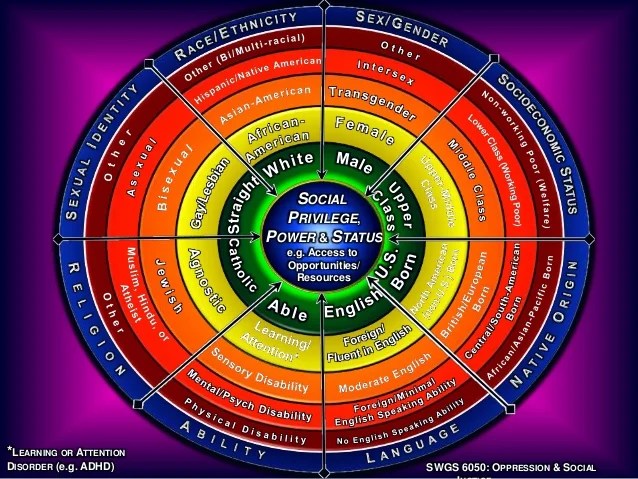
Likewise the end game is to tie in everybody who is a product of Christendom, radical and classical. As was seen on MSNBC not long ago, the end game is to make everyone who believes rights come from God not government look like a threat (MSNBC guest says “Christian nationalists” believe rights come from God, not government, and that this is different than what Christians believe | Not the Bee). Of course if rights come from government, they are privileges not rights, but they hope you have the leftovers from a Christian world to not realize this.
In all fairness to MacArthur, not once did I hear an accurate definition of Christian Nationalism or Postmillenialism. When Todd Friel discussed MacArthur’s words he got the spectrum right but not what most Christian Nationalists believe.
The former teaches that a nation’s laws must honor God and that nations always have a God. They are not state churchists and Erastian, they are Kuyperians and divide the spheres of governance. The family, state and church are different authorities that are separated institutions.
MacArthur defines Postmillennialism quite poorly, stating in his answer
“Christian nationalism is usually tied to what is called post-millennialism, and that is the view that the church, somehow, by influencing the culture, can bring in the kingdom of Christ. In other words, it’s the idea not that Christ returns and sets up His kingdom, but that the church establishes His kingdom and then hands it to Him.”
John MacArthur, Q and A
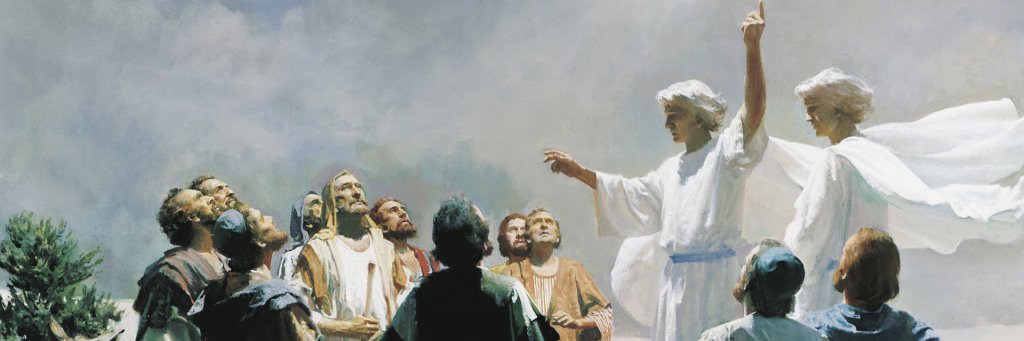
Unlike what MacArthur claims about it, Postmillennialism doesn’t teach that we make the final state happen. MacArthur thinks the final state is the kingdom, but the kingdom started at Christ’s ascension when he received all power and authority. Christians look forward to the New Heavens and the New Earth, but the kingdom does not wait for that. The Kingdom is still there but is now present wherever Christ has rule and namely is manifest in the church. Postmillennialism believes that the kingdom was established at the ascension with Christ as head, and Christ reigns now.
If we are to disciple, the nations (Mt 28:19-20) that demands both their governments and governors learn all that Christ commanded. This is also the present reality Christ’s first coming heralded, one that is lost in Evangelicalism, an occurrence which is at the core of Christianity’s decline in the West.
I am brought to remember a conversation I had with another bible camp worker when I was young. She read a section of a Gospel that talked about the kingdom of heaven. She confessed she had no clue what that meant. That’s a rarity in Church history.
Let me take but a moment, though hours could be spent, to introduce it from the Gospels
2 “Repent, for the kingdom of heaven is at hand.”[
Matthew 3:2
17 From that time Jesus began to preach, saying, “Repent, for the kingdom of heaven is at hand.”[a]
Matthew 4:17
15 and saying, “The time is fulfilled, and the kingdom of God is at hand;[a] repent and believe in the gospel.”
Mark 1:15
John the Baptist and Jesus sound like they expected Christ to receive his kingdom soon. Neither were mistaken.
As history unfolded in the recording of scripture, we see they were right.
In Revelation 1:1-7 we hear Christ is king over the kings of the earth and that we are his kingdom, and he is coming with the clouds (biblical and near eastern language of divine judgment).
1 The revelation of Jesus Christ, which God gave him to show to his servants[a] the things that must soon take place. He made it known by sending his angel to his servant John, 2 who bore witness to the word of God and to the testimony of Jesus Christ, even to all that he saw. 3 Blessed is the one who reads aloud the words of this prophecy, and blessed are those who hear, and who keep what is written in it, for the time is near.
4 John to the seven churches that are in Asia:
Grace to you and peace from him who is and who was and who is to come, and from the seven spirits who are before his throne, 5 and from Jesus Christ the faithful witness, the firstborn of the dead, and the ruler of kings on earth.
To him who loves us and has freed us from our sins by his blood 6 and made us a kingdom, priests to his God and Father, to him be glory and dominion forever and ever. Amen. 7 Behold, he is coming with the clouds, and every eye will see him, even those who pierced him, and all tribes of the earth will wail[b] on account of him. Even so. Amen.
Revelation 1:1-7
Unlike Daniel 12 which says seal the words, for the time is far off, John is told the time is near.
4 But you, Daniel, shut up the words and seal the book, until the time of the end. Many shall run to and fro, and knowledge shall increase.”
Daniel 12:4
“So we believe the Bible teaches that things get worse and worse, headed toward the wrath of God, which we’re seeing in Revelation. And then our Lord returns, Himself, to establish His Kingdom,”
John MacArthur, Q and A
Though I have already, you don’t have to go to the book of Revelation to see this isn’t true.
25 For he must reign until he has put all his enemies under his feet. 26 The last enemy to be destroyed is death. 27 For “God[a] has put all things in subjection under his feet.” But when it says, “all things are put in subjection,” it is plain that he is excepted who put all things in subjection under him. 28 When all things are subjected to him, then the Son himself will also be subjected to him who put all things in subjection under him, that God may be all in all.
1 Corinthians 15:25-28
Hard to reign without a kingdom and without authority over the nations. Stranger still for a king to reign without a law or the demands of his law to be upon the subjects. Stranger still for things to get worse if Christ is putting his enemies under his feet. If I had to point to one verse for postmillennialism it would be this. 1 Corinthians 15:25-28 tells us Christ must reign until he puts his enemies under foot. Somehow MacArthur missed both the kingdom exists and what it’s purpose is.
Turn to Daniel 7 where we are told a figure like a son of man appears at the throne of God, receiving. power and glory to reign forever.
13 “I saw in the night visions,
and behold, with the clouds of heaven
Daniel 7:13-14
there came one like a son of man,
and he came to the Ancient of Days
and was presented before him.
14 And to him was given dominion
and glory and a kingdom,
that all peoples, nations, and languages
should serve him;
his dominion is an everlasting dominion,
which shall not pass away,
and his kingdom one
that shall not be destroyed.
That kingdom not being destroyed sounds a lot like what we saw in 1 Corinthians, it also sounds like the gates of hell failing against the church. (Matthew 16:18)
In Mark 14:62 Jesus told the Sanhedrin they would see him as the figure in Daniel 7 receiving authority and bringing judgment.
62 And Jesus said, “I am, and you will see the Son of Man seated at the right hand of Power, and coming with the clouds of heaven.”
Mark 14:62
This historic fulfillment is retold in Revelation 5.
5 Then I saw in the right hand of him who was seated on the throne a scroll written within and on the back, sealed with seven seals. 2 And I saw a mighty angel proclaiming with a loud voice, “Who is worthy to open the scroll and break its seals?” 3 And no one in heaven or on earth or under the earth was able to open the scroll or to look into it, 4 and I began to weep loudly because no one was found worthy to open the scroll or to look into it. 5 And one of the elders said to me, “Weep no more; behold, the Lion of the tribe of Judah, the Root of David, has conquered, so that he can open the scroll and its seven seals.”
6 And between the throne and the four living creatures and among the elders I saw a Lamb standing, as though it had been slain, with seven horns and with seven eyes, which are the seven spirits of God sent out into all the earth. 7 And he went and took the scroll from the right hand of him who was seated on the throne. 8 And when he had taken the scroll, the four living creatures and the twenty-four elders fell down before the Lamb, each holding a harp, and golden bowls full of incense, which are the prayers of the saints. 9 And they sang a new song, saying,
“Worthy are you to take the scroll
and to open its seals,
for you were slain, and by your blood you ransomed people for God
from every tribe and language and people and nation,
10 and you have made them a kingdom and priests to our God,
and they shall reign on the earth.”11 Then I looked, and I heard around the throne and the living creatures and the elders the voice of many angels, numbering myriads of myriads and thousands of thousands, 12 saying with a loud voice,
“Worthy is the Lamb who was slain,
to receive power and wealth and wisdom and might
and honor and glory and blessing!”13 And I heard every creature in heaven and on earth and under the earth and in the sea, and all that is in them, saying,
“To him who sits on the throne and to the Lamb
be blessing and honor and glory and might forever and ever!”14 And the four living creatures said, “Amen!” and the elders fell down and worshiped.
Revelation 5:1-14
This takes place after the ascension when Jesus told the disciples he had been given all power and authority (Mt 28:18-20).
By the writing of Revelation, Jesus encourages Christians by telling them he is on his throne.
21 The one who conquers, I will grant him to sit with me on my throne, as I also conquered and sat down with my Father on his throne.
Revelation 3:21
I have not heard those using the label of Christian Nationalist for themselves arguing for seeking the states favor, or using it’s means to further the Gospel. What I have heard is more in line with how we have the disciples testifying and making disciples of Romans like Cornelius in Acts 10. Paul testified to Agrippa in Acts 26 and tried to convert him. Are they to not act like a Christian in their positions of authority? Are they to leave office and wait for Christ to lose and the church to lose out to the gates of hell which are on the defense (this is in sad irony something MacArthur acknowledged)? Are we to not leaven the dough?
The real division is over whether or not Jesus is really Lord, not just a personal savior. That cuts inside and outside the church. Rome had no problem with a personal savior, it was Christ as king that got Christians killed. This is why Pergamum has a peculiar title in the book of Revelation.
13 “‘I know where you dwell, where Satan’s throne is. Yet you hold fast my name, and you did not deny my faith[b] even in the days of Antipas my faithful witness, who was killed among you, where Satan dwells.
Revelation 2:13
Pergamum was a regional center of Emperor worship. Caesar was the embodiment of the state, the God of a deified Rome. Rome used the image of the body to goad it’s citizens in their service of the state. Knowing this, Paul takes this, and points to Christ instead, using the image of Christians as the body of Christ. The Roman state had become God in the empire. The choice was clear to Christians, either Caesar is Lord or Christ is Lord. You will find your citizenship in Rome or in the Kingdom of God.
12 giving thanks[a] to the Father, who has qualified you[b] to share in the inheritance of the saints in light. 13 He has delivered us from the domain of darkness and transferred us to the kingdom of his beloved Son, 14 in whom we have redemption, the forgiveness of sins.
Colossians 1:12-14
After Christ conquered Rome, Christian law became a dominating influence in what became known as Christendom. English Law, namely the Protestant Lex Rex law tradition is derived from the biblical law (using OT general equity). The Reformers and the English King Alfred the Great took the biblical law as the foundation of their own. The book of Deuteronomy says the law will make nations wonder at the God of the Bible (Deuteronomy 4:1-8). What those most often using the term want is this with an open admission of who God is that makes him the God of the public sphere.
Nature abhors a vacuum, and we have all seen how the absence of God’s law has simply led to wokeism filling in the gap even within our churches.
I don’t use the term Christian Nationalist; it is intentionally meant to sow confusion by those who originated it. We still must face that God created nations, and intends them to be ruled by Christ, demanding them to follow his law. Loving your neighbor means instructing them in his law. Both of which God gets to define. A Christian society living in Christian laws is a loving setting that God blesses. Let’s stop pretending that human sin defines the command, that the mistakes of the past define the system therefore the command doesn’t exist, and that God would not have all the earth honor and follow him in all spheres of life.
“So the idea that you should link up some political effort, some political process, some social process, some gain of power or influence in a culture as part of the advance of Christianity is alien to Christianity,”
John MacArthur, Q and A
Compare to Jesus’ words.
31 He put another parable before them, saying, “The kingdom of heaven is like a grain of mustard seed that a man took and sowed in his field. 32 It is the smallest of all seeds, but when it has grown it is larger than all the garden plants and becomes a tree, so that the birds of the air come and make nests in its branches.”
33 He told them another parable. “The kingdom of heaven is like leaven that a woman took and hid in three measures of flour, till it was all leavened.”
Matthew 13:31-33
Jesus taught, as did the disciples that his kingdom grows to engulf the whole world. That would include it’s institutions. Like leaven, leavening a loaf of bread the Gospel transforms whole societies.
When we do missions, we start schools, hospitals, and other institutions to teach cultures how to think like Christians. We transform moral systems and legal systems to follow. But when we try to do it here, it is somehow evil?
John MacArthur describes the “Christian Nationalist” approach thus “You never have our Lord approaching anything like that, nor the apostles, and particularly the apostle Paul; he sought to gain no favor with the Roman Empire whatsoever, or for that matter with any other of the rulers that he ran into during his life.”
John MacArthur, Q and A
I do not know where he is getting this idea that those claiming the title “Christian Nationalist” advocate for this. Neither have I heard them advocate this decidedly Liberal/Mainline idea. What they advocate for is demanding the society acknowledge Christ’s lordship and reflect this in their laws.
He continues.
“We have to be the people who uphold righteousness. When we come to vote, we want to vote for that which is the most righteous option. Obviously, we can’t vote in righteousness, but we have to vote in a way that reflects our commitment to the righteousness of God,”
John MacArthur Q and A
Does that sound coherent with what he has been saying? What would the results be if we won? Wouldn’t it be a Christian nation? Where is he getting what the righteousness of God looks like? The law of God?
The reality remains that law teaches and catechizes. Abortion was not the untouchable idea it is today before Roe v Wade pretended it was law, neither was abolition before it passed in the 13th amendment. Many who support gay rights and licentious sex laws do so because they grew up with them as law. But aside from that, if Christians act like Christians like MacArthur still advocates, they may accidentally create a Christian society. We may accidentally win down here, and Christ may look like a king with authority. Postmillenialism appears an accidental outworking of making disciples.
MacArthur, with all due respect has shown over and over he does not know what the kingdom is, and he does not understand what the advocates of Postmillennialism (or the Kuyperian branch of Christian Nationalism, who are predominantly postimillennial) actually believe. What he ought to do by his theology, is vote the worst in (if he votes at all), refuse to make a difference, and bring the persecution so that Christ will return and establish his kingdom because we have no king. In fact, we must lose and the faster we do, the sooner comes the kingdom.
MacArthur does not live a failure theology for one simple reason, he actually has Christ as his Lord. Dispensationalism has robbed him of the understanding that Jesus is the Lord of all the Earth. He is so beholden to the historic innovation of dispensational theology that he fails to recognize what has been the historic norm throughout Christian history. Worse, he can’t see what scripture teaches. Christ is king is central to Christianity, and to be king he has to have a kingdom. Whether he or his fellow dispensational premillennialists will admit it or not, MacArthur lives like a postmillennial and a “Christian Nationalist.” Every Christian lives with Christ as Lord, and therefore lives a life of Christ as King of the Nations.

 The Write Place
Leave a comment