Subscribe to get access
Read more of this content when you subscribe today.

There are times and moments in history, where the importance of your eschatology or other points of theology become especially pointed. Of late there has been serious questioning in the church around the identity of God’s people. In no small way this is due to the situation in the middle east (Samuel Sey does excellent…
There are times and moments in history, where the importance of your eschatology or other points of theology become especially pointed. Of late there has been serious questioning in the church around the identity of God’s people. In no small way this is due to the situation in the middle east (Samuel Sey does excellent work, here).
The question I seek to answer isn’t who you should support and why. There are good reasons to support Israel, the question is what God is doing in the world, and who is his people of promise and purpose.
We may not think of it in such simple terms as who is God’s people, but at it’s heart the question who and what the place of ethnic Israel is in relation to the Church is the question of who God’s people is. Now that we have the Church, what about the ethnic nation that continues to this day?
Since we think so tightly today along the lines of ethnic Israel. I will start with why God called Abraham.
Genesis 12:1-3
“Now the Lord said[a] to Abram, “Go from your country[b] and your kindred and your father’s house to the land that I will show you. 2 And I will make of you a great nation, and I will bless you and make your name great, so that you will be a blessing. 3 I will bless those who bless you, and him who dishonors you I will curse, and in you all the families of the earth shall be blessed.”
God explains himself when he comes to Abraham, a man among the unbelieving nations, why he is being called. It is so that the nations of the earth shall be blessed. This is right after the Tower of Babel, where God spread the families of humanity over the face of the earth. It is also not the first time we find mention of a seed being a hope for humanity. This is repeated to Abraham’s grandson Jacob, later named Israel, in Genesis 28:14
“14 Your offspring shall be like the dust of the earth, and you shall spread abroad to the west and to the east and to the north and to the south, and in you and your offspring shall all the families of the earth be blessed.”
It is also not the first time the idea of seed is mentioned.
Genesis 3:14-15
“ The Lord God said to the serpent,
“Because you have done this,
cursed are you above all livestock
and above all beasts of the field;
on your belly you shall go,
and dust you shall eat
all the days of your life.
15 I will put enmity between you and the woman,
and between your offspring[a] and her offspring;
he shall bruise your head,
and you shall bruise his heel.”
The creation of Israel was for the coming of the Jesus Christ the Messiah.
Paul tells us this has been fulfilled in Christ.
Galatians 3:7-9
7 Know then that it is those of faith who are the sons of Abraham. 8 And the Scripture, foreseeing that God would justify[c] the Gentiles by faith, preached the gospel beforehand to Abraham, saying, “In you shall all the nations be blessed.” 9 So then, those who are of faith are blessed along with Abraham, the man of faith.
|
The Israel of God is the body of the covenanted. The true Israel, the invisible Church in all ages are the true children of God. Today we see them, Jew by blood and Gentile by birth in the Church which is the kingdom of God breaking into this world. Standing before God is not contingent in your ethnic identity, but in your standing before God in Christ.
So what are we to make of the ethnic nation that remains? Ever since Darby this has been a confusing matter for the church, and not without question or embarrassment in conduct in history. The question though was early as well, and the answer given in the immediate days of the New Covenant.
Romans 9: 4 They are Israelites, and to them belong the adoption, the glory, the covenants, the giving of the law, the worship, and the promises. 5 To them belong the patriarchs, and from their race, according to the flesh, is the Christ, who is God…11:28 As regards the gospel, they are enemies for your sake. But as regards election, they are beloved for the sake of their forefathers.
29 For the gifts and the calling of God are irrevocable.”
The Westminster Larger Catechism takes time to address this in question 191
Westminster Larger Catechism
WLC 191: What do we pray for in the second petition?
Answer: In the second petition (which is, Thy kingdom come1), acknowledging ourselves and all mankind to be by nature under the dominion of sin and Satan2, we pray, that the kingdom of sin and Satan may be destroyed3, the gospel propagated throughout the world4, the Jews called5, the fulness of the Gentiles brought in6; the church furnished with all gospel officers and ordinances7, purged from corruption8, countenanced and maintained by the civil magistrate9; that the ordinances of Christ may be purely dispensed, and made effectual to the converting of those that are yet in their sins, and the confirming, comforting, and building up of those that are already converted10; that Christ would rule in our hearts here11, and hasten the time of his second coming, and our reigning with him forever12; and that he would be pleased so to exercise the kingdom of his power in all the world, as may best conduce to these ends13.
Matt 6:10
Eph 2:2-3
Psalm 68:1,18; Rev 12:10-11
2 Thess 3:1
Romans 10:1
John 17:9,20; Romans 11:25-26; Psalm 67
Matt 9:38; 2 Thess 3:1
Mal 1:11; Zeph 3:9
1 Tim 2:1-2
Acts 4:29-30; Eph 6:18-20; Romans 15:29-30,32; 2 Thes 1:11; 2 Thes 2:16-17
Eph 3:14-20
Rev 22:20
Isa 64:1-2; Rev 4:8-11
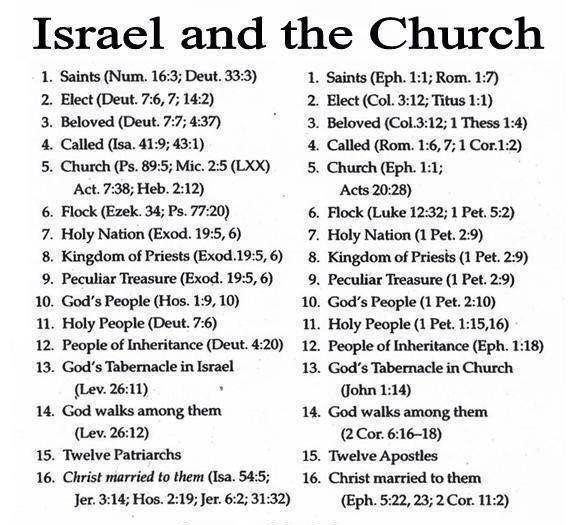
Together, Israel and the Church are called saints, or Holy Ones (Num 16:3, Deut 33:3, Eph 1:1; Rom 1:7). Chosen and Elect Deut 7:6-7, Deut 14:2, Col 3:12, Titus 1:1).
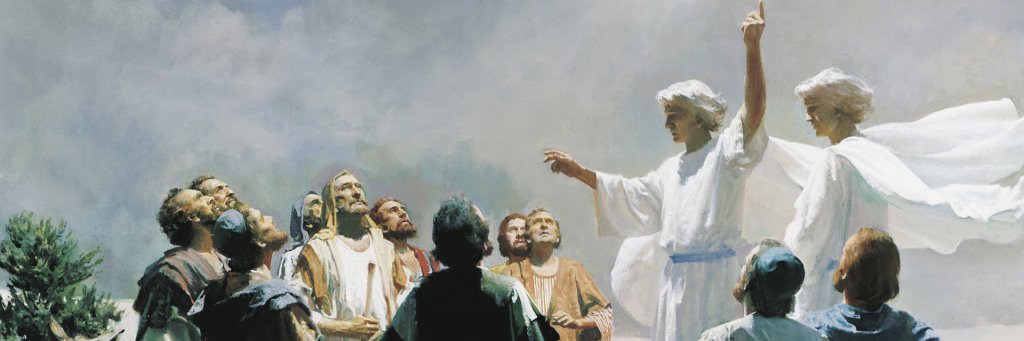
Jesus has this interesting interacting with the Apostles at the ascension.
Acts 1:6-8
“6 So when they had come together, they asked him, “Lord, will you at this time restore the kingdom to Israel?” 7 He said to them, “It is not for you to know times or seasons that the Father has fixed by his own authority. 8 But you will receive power when the Holy Spirit has come upon you, and you will be my witnesses in Jerusalem and in all Judea and Samaria, and to the end of the earth.”
The disciples have grown up anticipating the Messiah to restore an earthly, political, glory to the nation of Israel. Jesus does not deny any future to an ethnic state of Israel. Jesus at the last, does not deny a future for ethnic Israel and may even point to one. Rather than focus on their question, he points to the greater purpose of God. He tells them to wait for the Holy Spirit’s coming, whose work is to gather the elect into the Spiritual Israel.
We see in this what Paul says earlier, God remains faithful, and vindicates himself not for our sake but his. This also ought to encourage us alongside the promise that he shall be the God of the children of believers and bless the children of believers to 1000 generations (in effect, forever). I would not be surprised if just like the physical remnants of ethnic Israel, the Spiritual Israel comprised of the nations that have called Christ Lord will be preserved and revived to fidelity for the sake of God’s holy name.
The apostasy of the Jews was not the end for their nation (though covenant infidelity has consequences), it will not be the end for the rest of Israel as well. We have been grafted into that body as Paul says, and Paul indicates one day they nationally (Romans 11:11-31) will repent and Christ’s command to disciple the nations will be fulfilled (Matthew 28:19-20). This gives me incredible hope as well for the now apostate nations we live in here in the west, for God remembers his promises. I expect he will to Israel and to the West, bringing both to repentance, whatever the future holds.
The grand purpose of God’s work is redemptive history, the completion of the church. Scripture teaches, rather clearly that one day that will include the Old Testament ethnic nation of Israel, once again fully incorporated into the Spiritual Israel alongside the nations that Abram was called to bless. All nations in the end will be discipled, given as an inheritance to Christ the promised king of Israel and all the earth.

 The Write Place
Leave a comment